
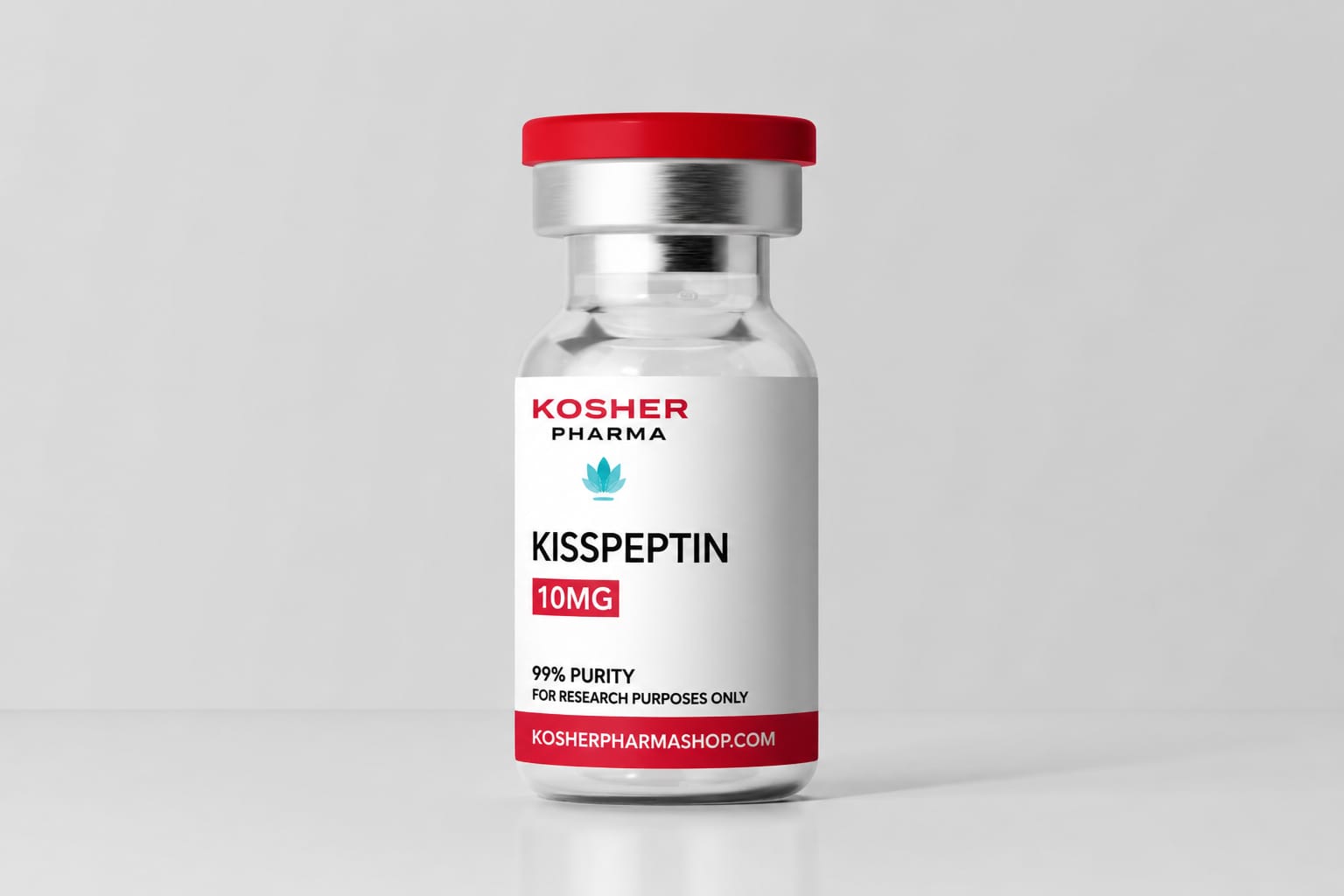

Kisspeptin – Regulatory Neuropeptide for Endocrine Research Applications
Kisspeptin is a naturally occurring neuropeptide that plays a central role in the regulation of the hypothalamic-pituitary-gonadal (HPG) axis. It is encoded by the KISS1 gene and functions primarily by stimulating the release of gonadotropin-releasing hormone (GnRH). As a result, kisspeptin has become a critical focus in research involving reproductive endocrinology and hormonal signaling pathways.
Moreover, kisspeptin interacts directly with the GPR54 receptor (also known as KISS1R), initiating a cascade of hormonal events that influence luteinizing hormone (LH) and follicle-stimulating hormone (FSH) secretion. Because of this upstream regulatory role, researchers frequently utilize kisspeptin in studies examining puberty onset, fertility mechanisms, and neuroendocrine control systems.
Additionally, kisspeptin has gained increasing attention for its broader biological implications. It is often investigated in relation to metabolic signaling, stress response, and neuroendocrine integration. Consequently, its versatility makes it a valuable compound in both basic and applied scientific research.
Key Features
- Neuropeptide Regulator – Central role in activation of the HPG axis
- GnRH Stimulation – Promotes release of gonadotropin-releasing hormone in research models
- KISS1R (GPR54) Interaction – Binds to specific receptors to initiate endocrine signaling cascades
- High Purity Research Grade – Manufactured for consistency and experimental reliability
- Hormonal Pathway Modulation – Commonly studied for its influence on LH and FSH secretion
- Versatile Research Utility – Applicable in reproductive, metabolic, and neuroendocrine studies
Research Applications
Kisspeptin is widely used in research focused on reproductive biology and endocrine regulation. For instance, it is frequently incorporated into studies examining the initiation of puberty and the hormonal mechanisms underlying reproductive maturation. Additionally, researchers utilize kisspeptin to explore fertility-related signaling pathways and gonadal function.
Furthermore, kisspeptin plays a significant role in neuroendocrine research. It is often studied for its involvement in integrating environmental and physiological signals that influence hormonal balance. As a result, it provides valuable insight into how the brain regulates endocrine function under varying experimental conditions.
In addition, kisspeptin is commonly applied in investigations related to metabolic regulation and energy balance. Its interaction with central nervous system pathways makes it a useful tool for studying how hormonal signals coordinate with metabolic states. Because of these diverse applications, kisspeptin remains a key compound in advancing research across multiple scientific disciplines.
Storage
To ensure optimal stability and performance, kisspeptin should be stored under controlled laboratory conditions:
- Store in a cool, dry place away from direct light
- Recommended storage at 2–8°C for short-term use
- For long-term storage, maintain at -20°C
- Avoid repeated freeze-thaw cycles to preserve peptide integrity
Proper storage is essential to maintain consistency and reliability in experimental outcomes.
Disclaimer
This product is intended strictly for research and laboratory use only. It is not for human consumption, not for therapeutic or diagnostic use, and not for veterinary use.
All applications must be conducted by qualified professionals in appropriate research environments, following all applicable regulations and guidelines.
| Dimensions | 1.77 × 0.79 × 1.77 in |
|---|
Be the first to review “KISSPEPTIN”
Related products

Longevity & Cellular Repair Research Peptides
Inflammation & Immune Research

Inflammation & Immune Research

Inflammation & Immune Research

Inflammation & Immune Research

Longevity & Cellular Repair Research Peptides

Metabolic Research Peptides

Metabolic Research Peptides

Reviews
There are no reviews yet.